
A few days ago, Korea celebrated the 80th anniversary of Independence Day. From 1909 to 1945, Korea was under harsh Japanese rule. Japan tried to erase Korean names and language, forced many Korean women, some teenagers, into sexual slavery, and sent huge numbers of Koreans into dangerous forced-labor sites across Japan. When the atomic bomb hit Hiroshima, many Koreans were there as mobilized laborers; nearly 20% of those who died were Korean.
Long before that, during the Joseon Dynasty, Korea had been one of the most advanced countries in Asia. But almost a century of weak kings slowed Korea’s modernization, while Japan opened to the world, industrialized quickly, and grew strong enough to defeat Russia in 1905. As Japan expanded into China, it conquered Korea in 1909, bringing deep suffering to the Korean people.
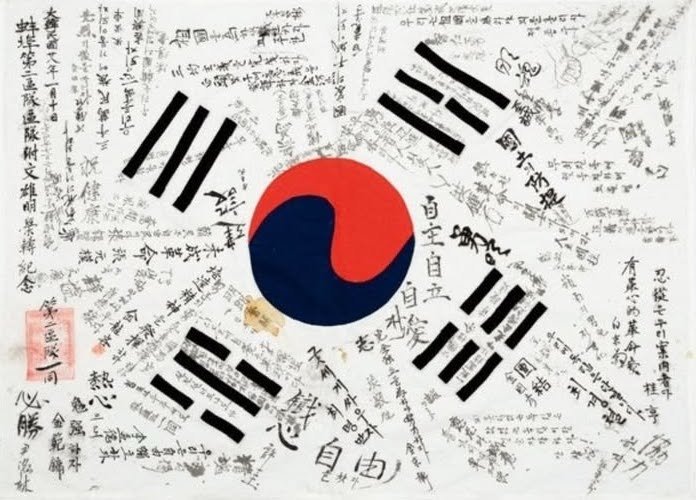
Even so, Koreans never gave up. Independence fighters fled to China and kept fighting throughout the occupation. After Japan surrendered in 1945, some said Korea was freed only because of the U.S. and the atomic bombs. But Koreans had resisted for decades and would have kept fighting with or without American help. It’s the same survival spirit seen in other long-lasting cultures like the Vietnamese, Irish, Polish, Nigerian, and Indian.
One fascinating part of the independence movement is the anthem they sang. Early Korean independence fighters used the melody of the Scottish folk song “Auld Lang Syne” for the aegukga, the Korean national anthem. Because American and Scottish missionaries had brought the tune to schools and churches in the early 1900s, everyone already knew it. Its simple five-note melody was easy to sing, so it spread quickly among students, churchgoers, and independence groups in Korea and China.
In the 1930s, composer Ahn Eak-tai decided Korea needed its own melody, so he wrote a new version. After liberation, his version became the official anthem in 1948. Still, the old “Auld Lang Syne” version survives in recordings and memories.
One of the most moving performances is by Oh Hee-ok, the last surviving female independence fighter before she passed away last year at 98. She worked as a teenage spy in Manchuria from 1939 to 1945. When President Moon Jae-in invited her to the Independence Day ceremony in 2017, she sang the old anthem with the Scottish tune, one of the last living links to that era.
And just to be clear, this isn’t an anti-Japan message. I love Japanese culture and people. This is simply history: what Koreans lived through, and how their old anthem once borrowed a Scottish folk melody.